
Every cat owner knows the struggle. You buy a nice sofa, and within a week it looks like a war zone. But here’s the thing — scratching is not your cat being naughty. It’s instinct. Cats scratch to mark territory, stretch their muscles, and maintain claw health. The trick isn’t to stop them, it’s to give them the right thing to scratch.
After testing a bunch of scratchers with my British Shorthair Didi, here’s everything I learned about choosing, using, and replacing cat scratching boards.
Material Matters: What’s Your Cat Actually Scratching?
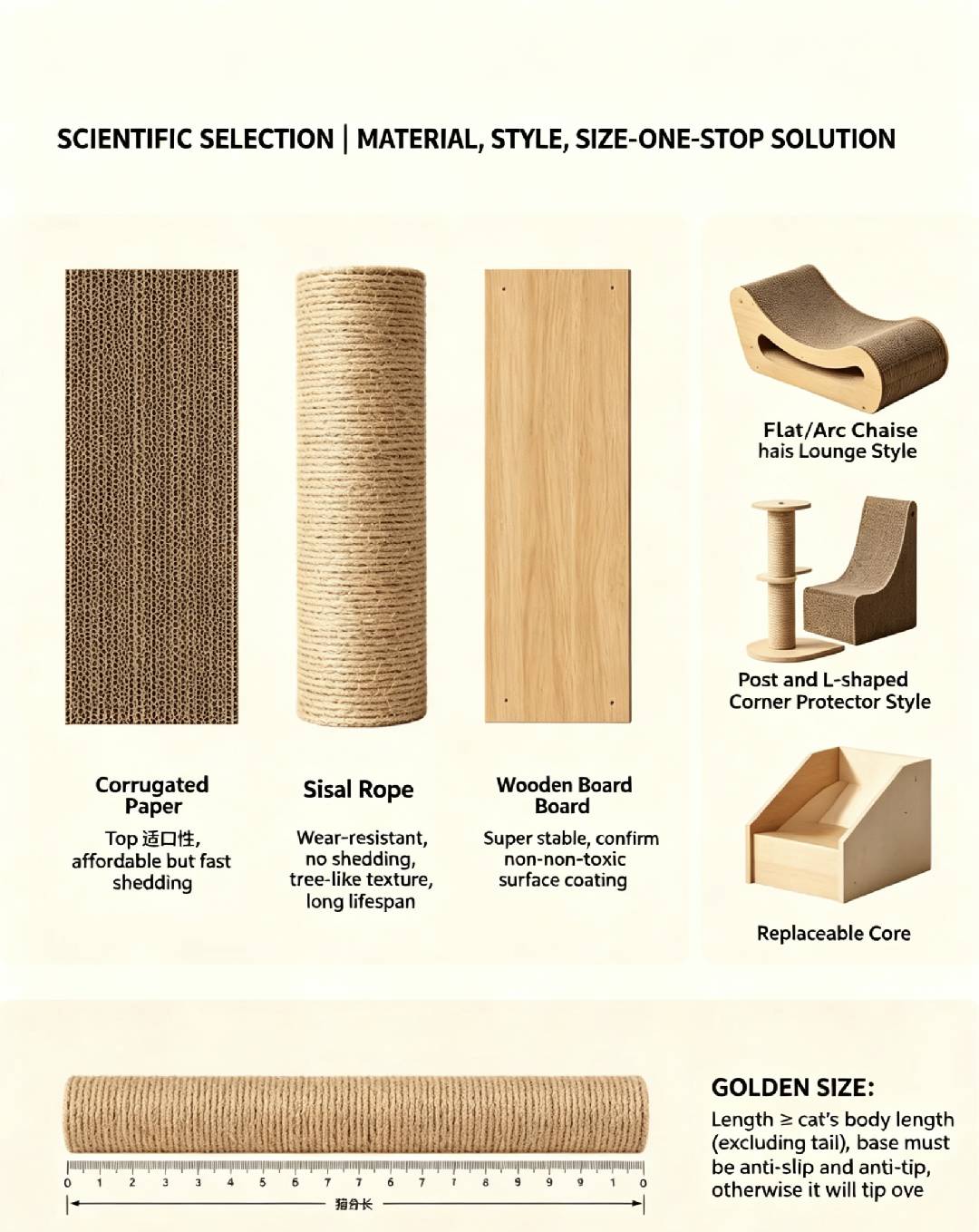
Not all scratching materials are created equal. Here’s how the three most common ones stack up:
1. Corrugated Cardboard
Best for: Kittens, new cat owners, cats who love to shred
Corrugated cardboard is the most popular scratcher material — and for good reason. Cats love the texture because it shreds satisfyingly under their claws, mimicking the feel of tree bark. It’s affordable, highly accepted by most cats, and you can find it everywhere.
The catch? It sheds. A lot. You’ll find little cardboard bits around the house, especially in the first few days. And because it’s soft, it wears out fast — expect to replace it every 3–6 weeks with regular use.
Perfect as a starter scratcher, or as a disposable option for cats who scratch aggressively.
2. Sisal Rope
Best for: Heavy scratchers, durability seekers
Sisal rope is the gold standard for scratching posts. It’s rough, durable, and doesn’t shed. The natural fiber texture gives cats a satisfying grip that feels close to scratching a real tree trunk. A quality sisal post can last 5–6 months of daily use — way longer than cardboard.
Most vertical scratching posts use sisal rope wrapping, and it’s also common on cat trees and wall-mounted scratchers. If you want a one-and-done solution that keeps your cat happy long-term, go sisal.
3. Wooden Board / Fiberboard
Best for: Stability, long-term use, aesthetic setups
Wooden scratching boards are the most durable option — they can last 6–12 months or even longer. They’re super stable and won’t tip over. The main thing to watch is the surface coating: make sure it’s non-toxic and cat-safe, because your cat will sniff, lick, and scratch it.
These tend to be pricier and heavier, but if you want something that looks like furniture and lasts, wood is your best bet.
Which Scratcher Style for Your Home?
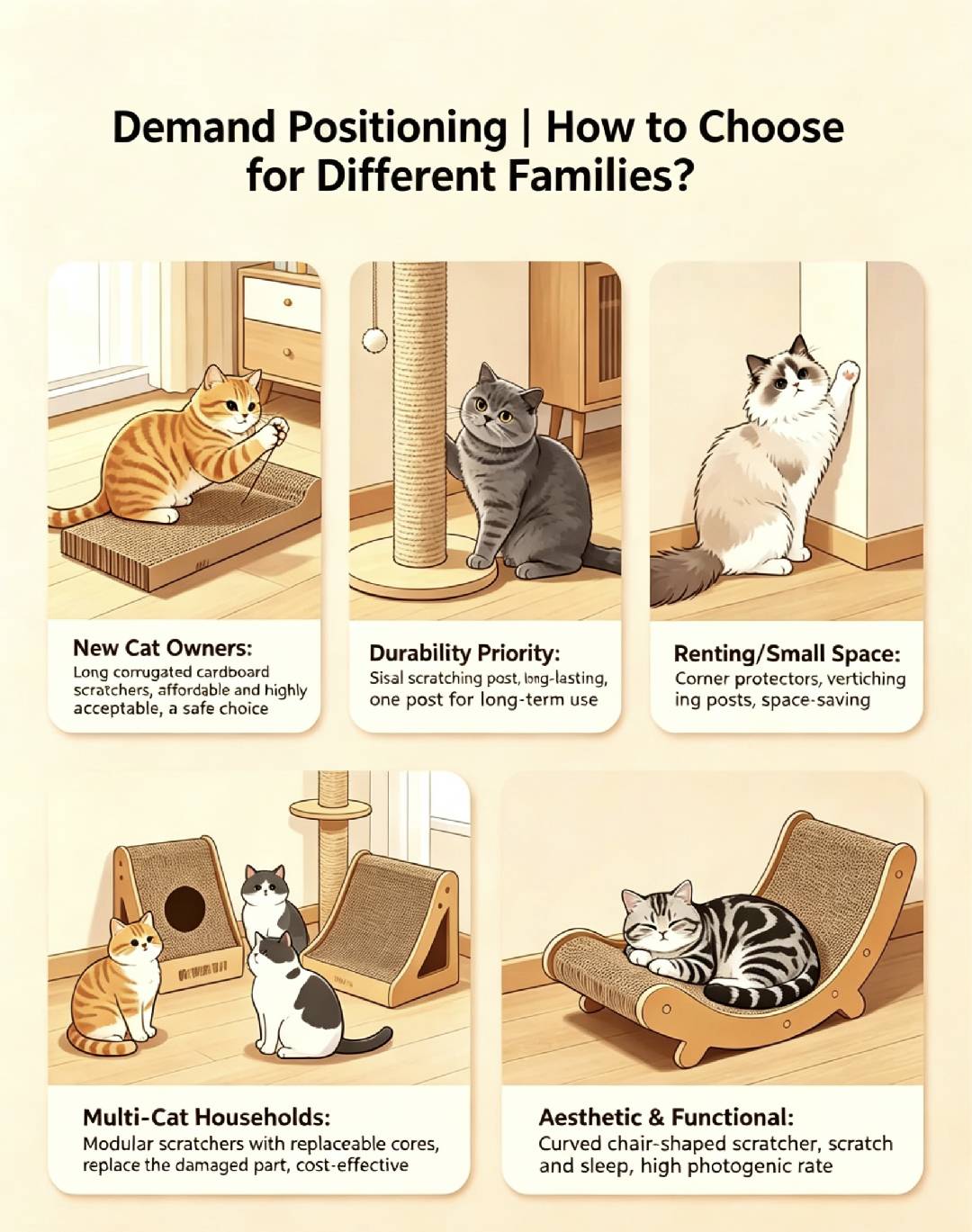
The best scratcher depends on your living situation and your cat’s personality. Here’s how to match the right style to your home:
🐱 New Cat Owners – Flat Cardboard Scratchers
If you just adopted your first cat, start simple. A long corrugated cardboard scratcher is cheap, easy, and most cats will take to it immediately. It’s the “safe choice” — low investment, high acceptance rate. You can figure out your cat’s preferences before spending more on premium options.
💪 Durability Priority – Sisal Scratching Posts
Got a cat that goes through cardboard like a shredder? Upgrade to a sisal scratching post. These things are built to last. A thick sisal post will survive months of aggressive scratching without falling apart. One post, long-term use — worth every penny.
🏠 Renting / Small Space – Corner Protectors
If you’re in an apartment or renting, floor space is precious. Corner protectors and wall-mounted scratchers are a game-changer. They mount right onto the wall corner, take up zero floor space, and protect your walls at the same time. Your cat gets a vertical scratching surface, and you don’t lose any square footage.
👨👩👧👦 Multi-Cat Households – Modular Scratchers
With multiple cats, you need multiple scratching surfaces — and they need to be durable. Modular scratchers with replaceable cores are the way to go. When one section wears out, you just swap the core instead of buying a whole new board. Over time this saves a ton of money, especially in a house with 2+ cats going at it.
✨ Aesthetic & Functional – Curved Chair Scratchers
Want something that looks good AND works? Curved chair-shaped scratchers are the new trend. They double as a scratching surface and a cat bed — your cat can scratch, then curl up and nap right there. They photograph beautifully too, so if you’re an Instagram cat parent, this is your pick.
Can You DIY a Scratching Post?
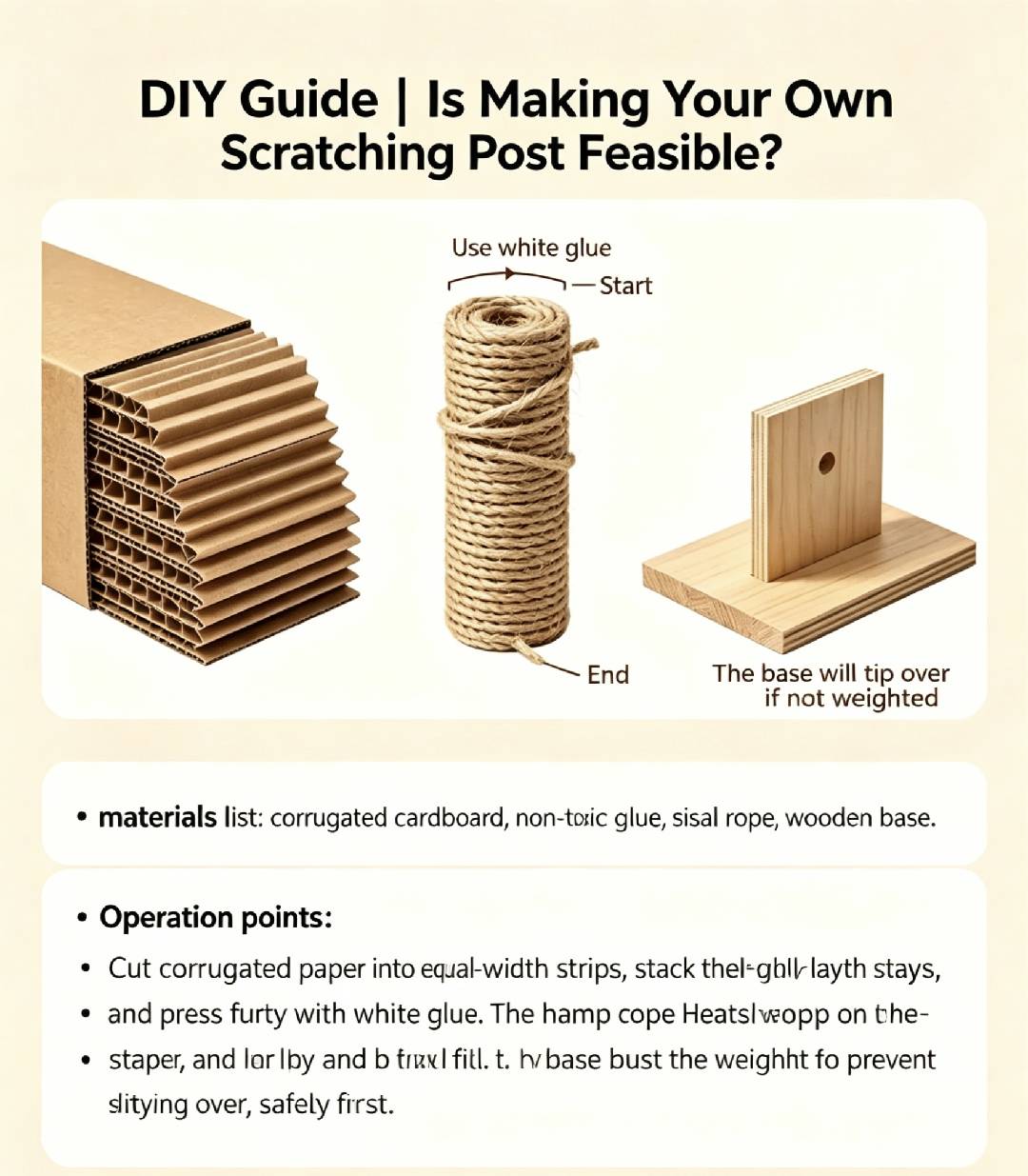
Short answer: yes, but it takes effort.
Here’s what you’ll need:
- Corrugated cardboard – the scratching surface
- Non-toxic white glue – for bonding layers
- Sisal rope – for wrapping the post
- Wooden base – heavy enough to prevent tipping
Quick DIY Steps
- Cut corrugated cardboard into equal-width strips
- Stack them vertically and press firmly with white glue to create a solid block
- Wrap a sisal rope tightly around the post core, applying glue as you go, from top to bottom
- Attach the wrapped post to a wooden base
- Make sure the base is heavy enough — a lightweight base WILL tip over, and that’s dangerous for your cat
⚠️ Important: Safety first. A tipping scratching post can scare your cat or even hurt them. Always weight the base, or mount it securely. If DIY sounds like too much hassle, store-bought is perfectly fine — and often better designed.
When to Replace Your Cat’s Scratching Board
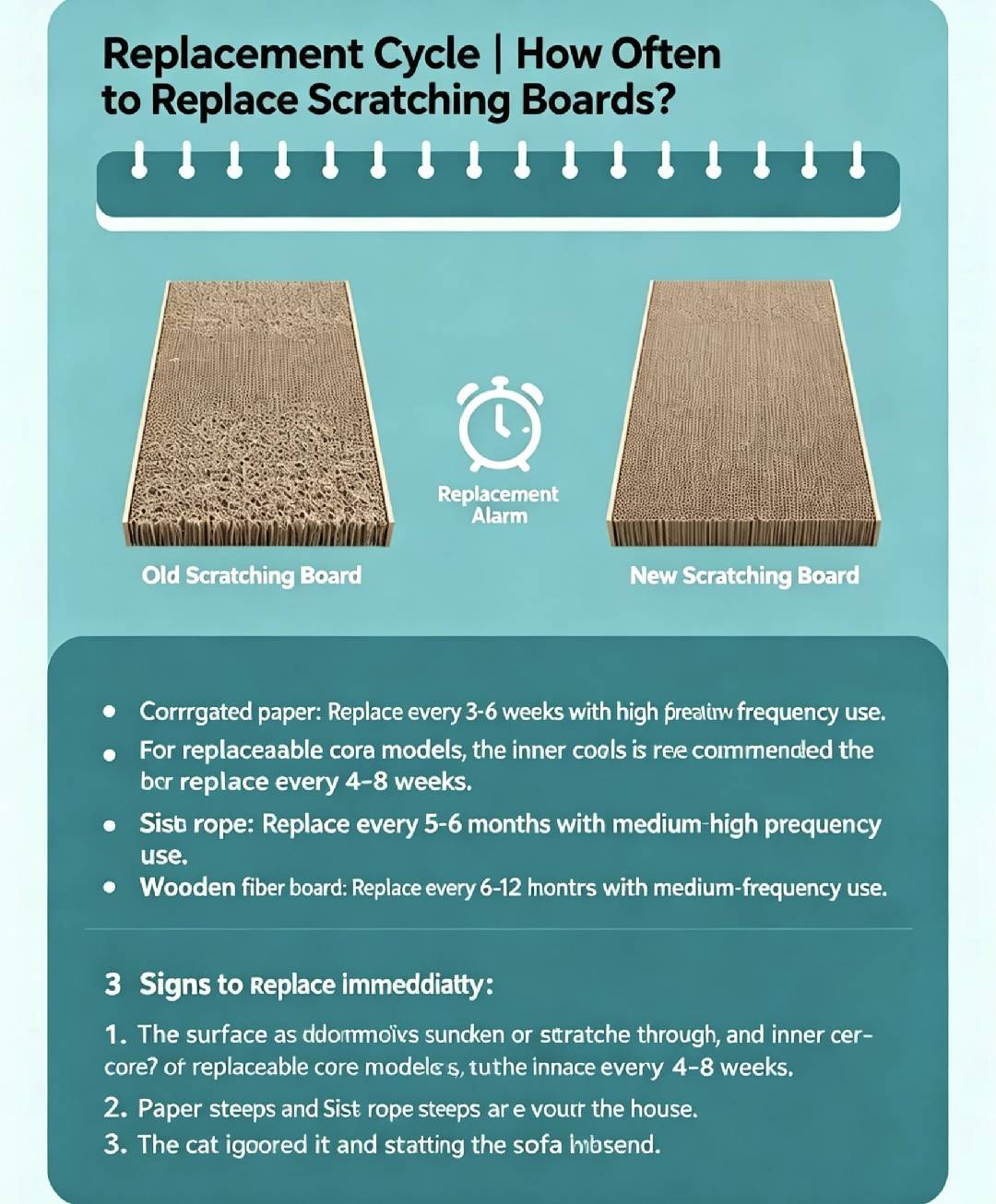
Scratchers don’t last forever. Here’s a general replacement timeline based on material and usage:
| Material | Replacement Frequency | Usage Level |
|---|---|---|
| Corrugated cardboard | Every 3–6 weeks | High frequency |
| Replaceable core models | Every 4–8 weeks (core only) | Medium–high |
| Sisal rope post | Every 5–6 months | Medium–high |
| Wooden fiberboard | Every 6–12 months | Medium |
🚨 3 Signs It’s Time to Replace IMMEDIATELY
- The surface is sunken or scratched through — if your cat has worn a hole right through the board or post, it’s done. For replaceable core models, swap the inner core.
- Paper shreds and sisal fibers are all over the floor — excessive shedding means the scratcher is breaking down. Time for a new one.
- Your cat has stopped using it and started on the sofa instead — this is the biggest red flag. If your cat ignores the scratcher and goes for your furniture, the scratcher has lost its appeal. Replace it before your couch becomes the new scratching post.
The Golden Size Rule
No matter what material or style you choose, size matters. Here’s the one rule: the scratching surface should be at least as long as your cat’s body (excluding the tail).
Why? Cats need to fully stretch when they scratch. If the scratcher is too short, they can’t get that satisfying full-body extension — and they’ll look for something longer (like your sofa or curtains).
Also, make sure the base is anti-slip and won’t tip over. A scratcher that moves around when your cat uses it will scare them, and they’ll stop using it altogether.
Final Thoughts
Choosing a cat scratching board doesn’t have to be complicated. Start with the material that fits your cat’s scratching style, pick the right size, and keep an eye on wear and tear. A good scratcher isn’t just a toy — it’s furniture protection, exercise equipment, and stress relief for your cat, all in one.
Didi goes through phases — sometimes she wants cardboard, sometimes she’s all about the sisal post. I keep one of each around and swap them out when she gets bored. If your cat suddenly loses interest in their scratcher, don’t throw it away just yet — try moving it to a different spot first. Sometimes that’s all it takes.
Got a scratching story or a question? Drop it in the comments below. 🐾
This post contains affiliate links. As an Amazon Associate I earn from qualifying purchases.
🐱 More in Cat Care