
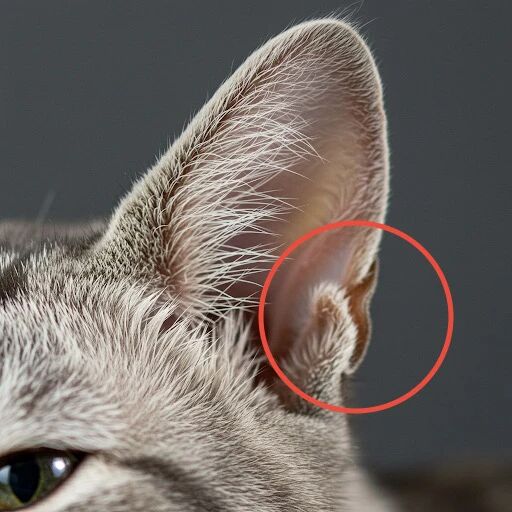
Look at your cat right now. Gently flip that ear toward the back. Near the bottom edge, you’ll see a small fold of skin — almost like a tiny pouch.
If you’ve never noticed it before, your first reaction is probably: wait, is that normal?
Yes. It’s called Henry’s Pocket, and every single cat has one.
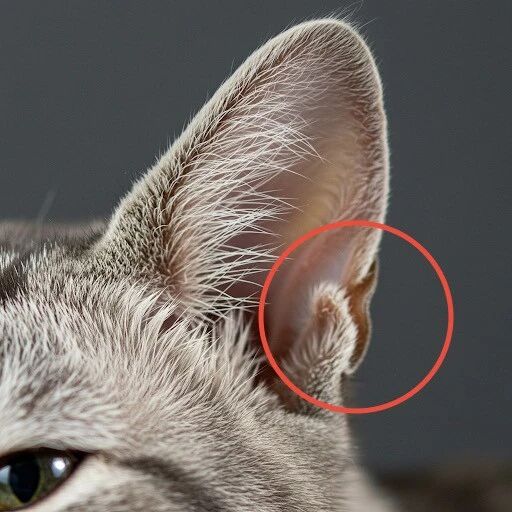
It’s not a wound. It’s not a deformity. It’s a small, intentional fold of skin at the back of the ear, officially called the cutaneous marginal pouch.

What It Actually Does
Scientists aren’t 100% sure why cats have it, but the leading theory is that this little pocket helps with two things: flexibility and hearing.
1. It gives the ear more range of motion
Think of Henry’s Pocket like an elastic band sewn into the edge of the ear. When your cat tilts, swivels, or rotates their ear to track a sound, this fold gives the skin extra slack — so the ear can move freely without pulling or folding awkwardly.
Cats can rotate their ears about 180 degrees, and that pocket is a big part of why.
2. It amplifies high-frequency sounds
Cats are tuned to hear the high-pitched squeaks of rodents, birds, and insects. The Henry’s Pocket may act as a small acoustic funnel, slightly boosting those high frequencies into the ear canal.
In other words: it’s one of the reasons your cat hears a bag of treats being opened two rooms away — before you even move.
3. It sharpens directional hearing
The fold may also help the cat pinpoint exactly where a sound is coming from. Combined with the 32 muscles in each ear, this is part of what makes cats such precise hunters.
Where the Name “Henry’s Pocket” Comes From
The pocket is named after Joseph Henry (1797–1878), an American physicist who pioneered the study of electromagnetism and acoustics. He didn’t discover the cat feature — but his work on sound waves was so foundational that the cat ear fold took his name as a nod.
The official anatomical term, cutaneous marginal pouch, is what you’ll see in veterinary textbooks. “Henry’s Pocket” is the more popular, casual name that stuck.
Quick Note for Cat Owners
Because the pocket is a fold, it can trap:
- Dirt and dust
- Wax buildup
- Moisture
- Ear mites (the most common issue)
When you’re giving your cat a good ear scratch, take a quick look. A swipe with a damp cloth or a vet-approved ear cleaner is usually enough.
Don’t use cotton swabs inside the ear canal — they can push debris deeper or damage the eardrum. If you see black debris, head-shaking, or a strong smell, it’s vet time.
The Takeaway
Henry’s Pocket is one of those small, weird features that almost no one knows about — but every cat has. It helps with hearing, flexibility, and is named after a 19th-century physicist.
Next time your cat ignores you calling their name but sprints toward the kitchen at the faintest sound of a treat bag — thank the Henry’s Pocket.
Photos adapted from a popular Chinese-language cat science post. Featured anatomically in every domestic cat as the cutaneous marginal pouch.
🐱 More in General